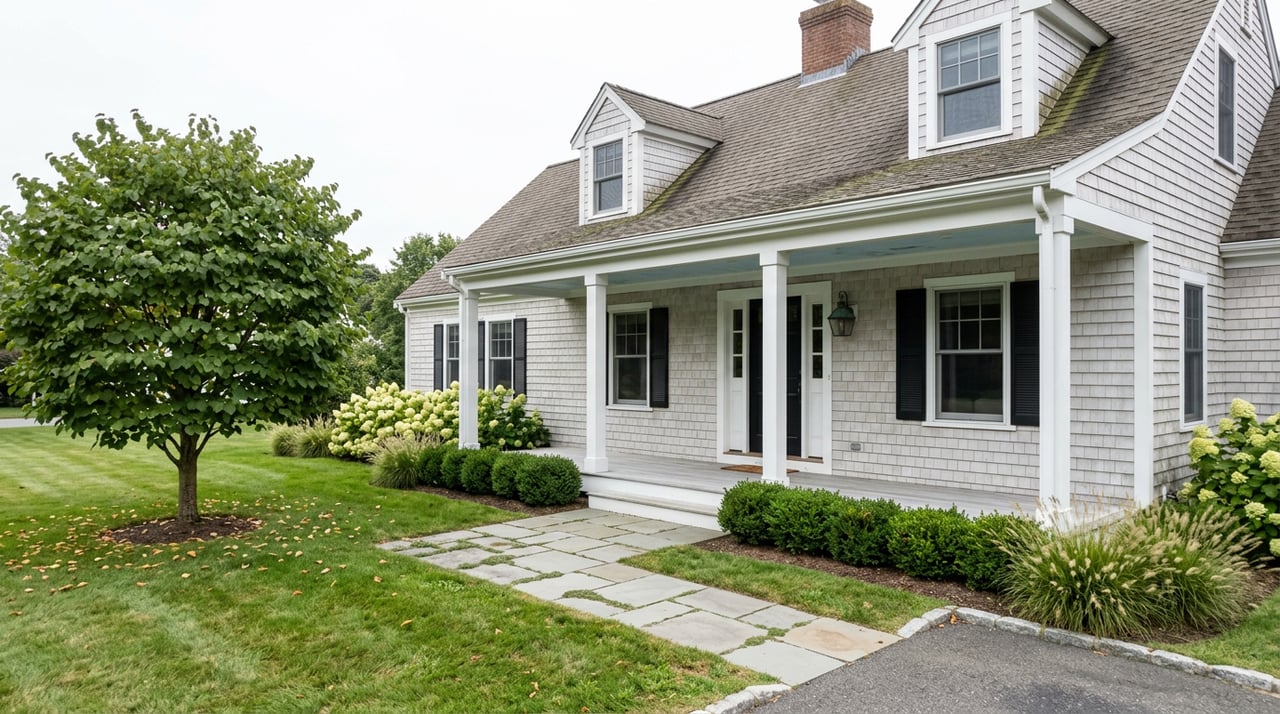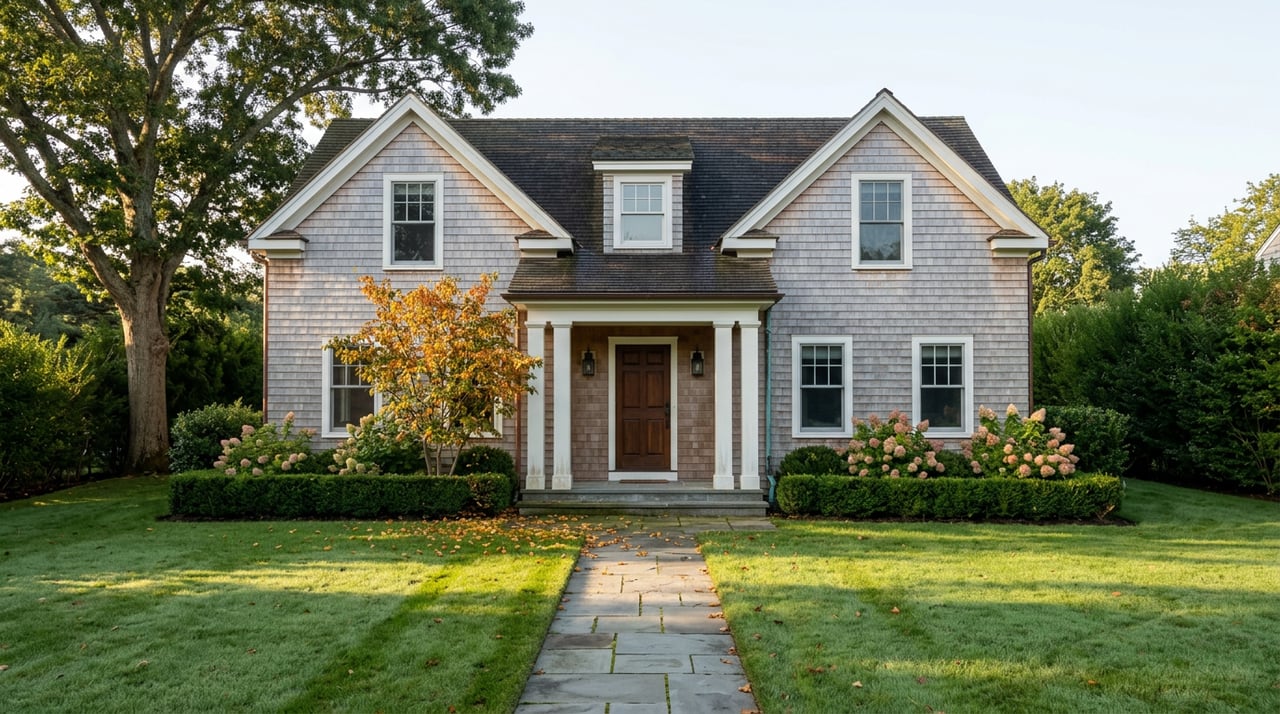
Two houses sit on the same block, share the same 10538 zip code, and send their kids to the same elementary school. One homeowner writes three property tax checks a year, to three different offices, on three different schedules. The other writes two. Neither house is inside or outside anything a real estate listing would ever flag. The difference is a boundary line that predates the automobile, and it still decides who taxes you, who plows your street, and who answers if you call for a fire truck.
A large share of homes that carry a Larchmont mailing address are not actually inside the incorporated Village of Larchmont. They sit in what the Town of Mamaroneck calls the Unincorporated Area, a separate governmental space that happens to get its mail through the Larchmont Post Office. The zip code tells you where the mail carrier starts the route. It tells you nothing about which government you just bought into.
One Post Office, Two Governments
The Village of Larchmont incorporated in 1891, when residents of Larchmont Manor got a charter from the state legislature to run their own affairs. The rest of the town stayed unincorporated because there weren't enough people living there yet to justify a second village government. That gap never closed. The Town of Mamaroneck's own FAQ page still draws the line plainly: the Town provides police, fire, and sanitation directly to residents of the Unincorporated Area, while the Village of Larchmont runs those same services itself, inside its own one-square-mile border.
So a house with "Larchmont, NY" on the deed can mean two entirely different relationships with local government. Inside the Village line, the fire department that responds is the Village's own. Outside it, in the Unincorporated Area, the Town sends its crew. Both households call themselves Larchmont. Only one of them is.
Three Bills If You're In, Two If You're Out
The clearest place this shows up is the mailbox. The Village of Larchmont is what New York calls an independent assessing unit. Its own Village Assessor sets a property's value for Village tax purposes, on a roll the Village publishes and maintains itself. The Town of Mamaroneck separately assesses that same parcel for school, town, and county tax purposes. A house inside the Village line can carry two different official assessed values at once, one set by the Village, one set by the Town, feeding two different tax calculations on the same building.
The billing calendar reflects the same split:
| Bill | Who sends it | Due date |
|---|---|---|
| Village property tax | Village of Larchmont Treasurer | June 30 |
| Town & County tax | Town of Mamaroneck Receiver of Taxes | April 30 |
| School tax, first installment | School district | September 30 |
| School tax, second installment | School district | January 31 |
A Village homeowner gets all four dates on the calendar. A homeowner in the Unincorporated Area skips the first line entirely. There's no separate village government to send that bill, because the Town is already billing them for the services a village would otherwise provide. Two neighbors, same street, same Larchmont address, and one of them has a bill the other has never seen and never will.
Right now that split isn't abstract. The Village's tax year runs June through May, so this year's Village bill went out June 1 and came due June 30, about three months back. The first school installment lands September 30, days from this writing. A Village homeowner is stacking a third payment of the calendar year on top of two they already made in April and June. Their Unincorporated Area neighbor is only two payments in.
This Year the Two Tracks Split Further Apart
For years, the assumption around Larchmont has been that village and town tax burdens rise together, since they're funding overlapping services in the same six square miles. The last two budget cycles broke that assumption.
The Town of Mamaroneck's calendar-2025 levy, the one billed each April, had originally been adopted at an increase of more than 15 percent before it was later trimmed back. That jump was large enough to draw residents to a public hearing at Town Hall and large enough to push the Town Board to finally appoint a joint Finance Committee with seven members drawn from both Mamaroneck and Larchmont, an idea that had been discussed for years without action. Over that same stretch, the Village of Larchmont's own levy for its 2025-26 fiscal year rose a comparatively modest 2.5 percent. Two governments taxing homes minutes apart moved by a gap of more than 10 percentage points in a single cycle.
The following cycle showed the split hadn't closed. The Town Board adopted its full 2026 budget on December 17, 2025, holding the overall levy increase to the state-mandated cap of 2.83 percent, an amount staff estimated would add roughly $308 a year to a home assessed near $1.71 million. In the preliminary numbers circulated that December, before final adoption, Town staff had actually projected two different rates inside that same budget: a 2.96 percent increase for the levy funding Unincorporated Area services, against 2.36 percent for the portion funding services delivered to the two incorporated villages, before either village added its own separate tax on top. Even inside one town budget, unincorporated homeowners and village homeowners weren't tracking the same number.
The Village, meanwhile, kept trimming its own side further. Trustees adopted a tentative 2026-27 budget in April 2026 with the levy increase cut to 2.11 percent, after amendments that shifted $150,000 of road paving costs out of the tax-supported general fund and into the parking fund instead.
None of this means one side of the line is reliably cheaper. It means the two governments respond to different pressures, different reserve targets, different labor contracts, and different capital plans, and their percentage increases don't move in lockstep from one cycle to the next. A buyer comparing two homes at the same price, in the same school district, could be comparing two different multi-year tax trajectories without the listing ever hinting at it.
Checking Before You Write an Offer
The fix isn't complicated, but it has to happen before contract, not after closing.
- Confirm which government actually taxes the parcel. The Town of Mamaroneck publishes a Local Roads by Municipality reference specifically because so many addresses are ambiguous by zip code alone.
- Ask which assessor set the current value on the property, Village or Town, since a Village home effectively carries two rolls.
- Look at the last two budget cycles for both the Village and the Town rather than a single year's rate, since this recent history shows the two can diverge sharply from one cycle to the next.
Bond ratings offer one more piece of public information worth a look, not as a prediction of future tax bills but as a rough signal of how each government has managed its finances. The Village of Larchmont currently carries a Moody's AAA rating. The neighboring Village of Mamaroneck carries AA+. Both are strong ratings. The fact that they differ at all is a reminder that these are genuinely separate financial entities, even when a map makes them look like one town.
A Couple of Questions Worth Asking Directly
Does living in the Unincorporated Area change the school tax bill? Not on its own. The September and January school tax installments are billed by the school district itself, and they land the same way for any parcel inside that district, whether the address sits within the Village line or in the Unincorporated Area. What changes is the Village bill layered on top, which only Village properties receive.
Is the Unincorporated Area a cheaper way to get a Larchmont address? There's no consistent answer, and this year's numbers show why. The two levies moved by very different margins across the last two cycles, sometimes with the Town's Unincorporated Area rate rising faster, sometimes the Village's. Anyone comparing two specific properties needs the actual current rates and recent trend for each, not an assumption based on the mailing address.
If you're weighing two homes that both say Larchmont and want to know, before you write an offer, which government actually sends the bills and what its last two budget cycles looked like, that's exactly the kind of due diligence Jennifer Jaffe walks buyers through as part of a local market consultation, parcel by parcel, before the numbers become a surprise.